
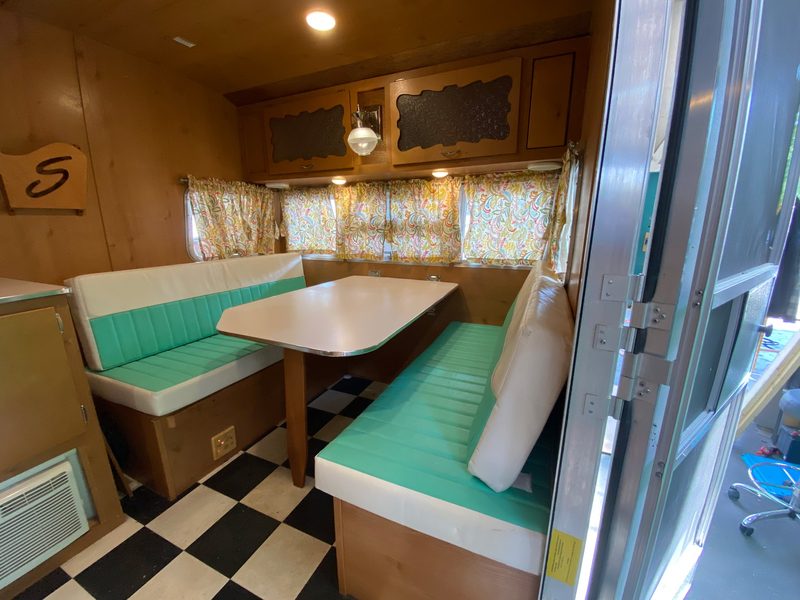
There is no worse feeling than pulling into a campsite near Bledsoe Creek State Park on a 95-degree August afternoon, flipping on the rooftop air conditioner, and feeling nothing but warm air limp out of the vents. An RV air conditioner works far harder than the central AC in your house — it sits on a hot metal roof in direct sun, cools a thin-walled box with big windows, and often runs on borrowed power from a campground pedestal. When it stops cooling, the fix is usually simple, but you have to know where to look. This guide walks White House, TN RV owners through what to check first, what the common causes are, and when it is time to call a mobile tech.
Why your RV air conditioner stops cooling in Tennessee heat
Middle Tennessee summers are brutal on a rooftop RV AC. A Dometic or Coleman unit is only designed to pull the inside temperature down about 20 degrees below whatever the outside air is. On a 97-degree day off I-65, that means the best you can realistically expect inside is the upper 70s — and that is only if the coils are clean, the filter is clear, and the unit is getting full voltage. Add a dirty condenser coil packed with pollen and road grime, a filter that has not been cleaned since last season, or a campground pedestal sagging to 105 volts because half the loop is running AC at once, and your unit simply cannot keep up. Understanding that your rooftop AC is fighting an uphill battle helps you focus on the things that actually restore its capacity.
Quick checks you can do at your campsite
Before you assume the worst, run through these steps in order. Most weak-cooling complaints we get across Robertson and Sumner County are solved by one of these:
- Pull and clean the return-air filter. It sits behind the interior ceiling grille. A filter caked with dust chokes airflow so the coil freezes or the air never gets cold. Wash it, dry it, and reinstall.
- Check the supply-vs-return temperature split. Hold a thermometer at a ceiling vent, then at the return grille. A healthy unit shows a 16 to 22 degree drop. A small split means low refrigerant capacity, airflow trouble, or a struggling compressor.
- Inspect your power source. A long, undersized extension cord or a tired 30-amp pedestal starves the compressor. Plug a voltage monitor into an inside outlet — anything sagging under 108 volts under load can keep the compressor from cooling properly.
- Look at the rooftop condenser coils. Pop the shroud and check for a mat of cottonwood, pollen, and bugs on the outer coil. Gently rinse or brush it clean so the unit can shed heat.
- Give it time and let it cycle. If you just switched from heat or the unit short-cycled, wait a few minutes; running the compressor again too fast can trip the internal overload.
Common causes of an RV AC not cooling
When the quick checks do not solve it, one of these is usually the culprit. Here is what each typically involves:
| Symptom | Likely cause | Typical fix |
|---|---|---|
| Fan runs, air not cold | Dirty coils, low voltage, or failing run capacitor | Clean coils, correct power, replace capacitor |
| Compressor never starts | Bad start/run capacitor, tripped breaker, thermostat fault | Test capacitor, reset breaker, check thermostat wiring |
| Coil freezes into ice | Restricted airflow or low charge | Clear filter/ducts; unit may need replacement if sealed system leaks |
| Breaker trips on startup | Weak capacitor or shore-power problem | Replace capacitor, verify 30/50-amp supply |
Rooftop RV air conditioners use a sealed refrigerant system with no service ports, so a unit that has truly lost its charge cannot simply be topped off like a home system — it is usually replaced. The good news is that the majority of no-cool calls we run are capacitors, coils, airflow, and power, not dead compressors.
Why an RV rooftop AC is different from your house AC
It is worth remembering that your motorhome or travel-trailer AC is not a scaled-down home unit. It runs on 120-volt shore power (or a generator), it is a self-contained sealed system bolted to the roof, and it depends on 12-volt house batteries or the converter to run the thermostat and fan controls. That is why an RV AC problem can actually start as an electrical problem. If your unit acts up alongside other 12-volt gremlins, it is worth ruling out power first — our guide on RV 12-volt power troubleshooting covers that. Refrigerant, capacitors, roof gaskets, and shore-power quality are all things a general handyman rarely tests, which is why RV-specific diagnosis matters.
How to keep your RV air conditioner cooling all summer
The best no-cool repair is the one you never need. Because White House sits right on the I-65 travel corridor and gets long, humid summers, an RV that is used or stored here works its rooftop AC hard from May through September. A little routine care keeps the unit ahead of the heat. At the start of the season, pull the interior filter and wash it, then climb up and remove the rooftop shroud to clear pollen, cottonwood fluff, and wasp nests off the condenser fins with a soft brush and a gentle rinse. Check that the mounting bolts are snug and the roof gasket has not dried out and cracked — a leaking AC gasket is a common source of ceiling water stains, and if you are already up there it pays to look at the whole roof the way our guide on resealing an RV roof in Tennessee describes.
Power quality matters just as much as cleanliness. If you routinely camp on 30-amp service and struggle to run the AC alongside other appliances, a hard-start capacitor or a soft-start module lets the compressor spin up on less current and eases the strain on a weak pedestal or a portable generator. Keep your house batteries and converter healthy so the 12-volt controls stay steady, park in shade when you can, and pre-cool the rig before the afternoon peak instead of asking the unit to claw back 30 degrees at 4 p.m. These habits routinely add years to a rooftop unit and keep the inside of your camper livable even when the Tennessee heat index climbs past 100.
One more local note: if you store your RV between trips, do not just flip the AC on and expect instant relief the first hot day out. Run it for 20 minutes at home in White House before you load up, watch for a strong cold vent and a normal-sounding compressor, and you will catch a weak capacitor or a dirty coil in your driveway instead of at a packed campground two hours up the interstate. A five-minute test at home beats a miserable first night away.
When to call a mobile RV AC tech in White House
Call for service when the compressor will not start, the breaker trips every time the AC kicks on, the coil keeps freezing after you have cleaned the filter, or you measure only a few degrees of cooling on a hot day. These point to capacitors, control boards, thermostats, or a failing sealed system — parts that need meters and RV experience to diagnose safely. Because we are mobile, we handle it right where your RV sits, whether that is your driveway in White House, a storage lot in Springfield, or a campsite in Gallatin or Hendersonville. You can see what a typical visit runs in our mobile RV repair cost guide, and for authoritative safety information on RV cooling and electrical systems the RV Industry Association is a solid resource.
Mobile RV AC repair — we come to you
Serving White House, Portland, Springfield, Gallatin, Hendersonville, Goodlettsville & the I-65 corridor.
Call or Text (618) 387-2229Frequently asked questions
Why is my RV air conditioner running but not cooling?
Usually a clogged filter, dirty coils, or low voltage from a weak pedestal or long cord. If the compressor never starts, it is typically a failed capacitor, tripped breaker, or bad thermostat. A mobile tech can measure amp draw and coil temperatures on-site to tell which it is.
How cold should my RV air conditioner blow?
Expect a 16 to 22 degree drop between the return-air and the supply vent. On a hot White House afternoon, only a few degrees of difference means the unit is underperforming and needs attention.
Can you repair my RV AC at my campsite near White House?
Yes — we are fully mobile and come to your driveway, storage lot, or campground across Robertson and Sumner County. Call or text (618) 387-2229.