
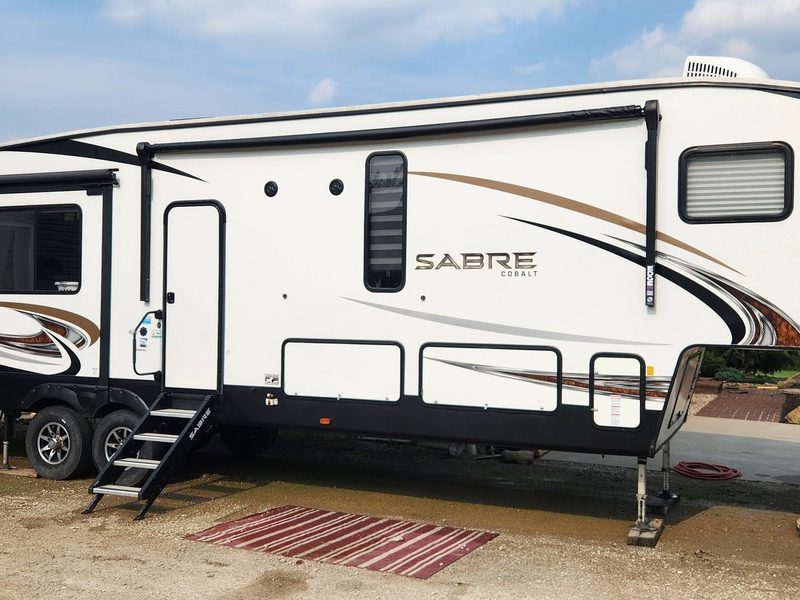
Cold showers are the fastest way to end a good camping trip. Whether you are boondocking off TN-76 or parked at a full-hookup site near Nashville, an RV water heater that quits leaves you rinsing dishes and scrubbing kids in freezing water. The unit in most rigs — a Suburban or Atwood 6- or 10-gallon tank, or a newer tankless model — is more complicated than the tank in your house because it can run on two completely separate energy sources and relies on your 12-volt system to think. This guide helps White House, TN RV owners figure out why there is no hot water and how to get it back.
How your RV water heater actually works
Most RV water heaters are dual-source: they can heat with LP propane, with a 120-volt electric element, or both at once. On the gas side, a direct spark ignition (DSI) board sends 12 volts to an igniter that lights a propane burner under the tank — so even the gas mode depends on your house batteries or converter being healthy. On the electric side, a heating element bolted into the tank works much like the one in a household water heater and is protected by a GFCI and its own thermostat and high-limit switch. A tankless unit skips the storage tank and fires the burner only when you open a hot tap. Knowing which source is failing is the first real step toward the fix, because gas problems and electric problems have almost nothing in common.
First things to check when there is no hot water
Work through these before assuming a part has failed. On the majority of service calls we run around Robertson and Sumner County, the answer is on this list:
- Find and press the reset button. Both the electric thermostat and the gas board often have a red reset. A tripped high-limit is a common, easy fix — press it and listen for the unit to fire.
- Confirm you actually have fuel and power. Check that the LP tank is not empty and the valve is open, and that shore power is live and the water-heater GFCI has not tripped at the panel or the outside compartment.
- Verify 12-volt house power. Even gas mode needs 12 volts for the control board and igniter. If your batteries are flat, the burner will not light. Weak 12-volt power causes a surprising number of "dead" appliances.
- Listen and look at the igniter. On gas mode you should hear rapid clicking, then a whoosh as the burner lights. Clicking with no flame points to a fuel or orifice problem.
- Make sure the bypass valve is set to normal. If the rig was winterized, the water-heater bypass may still be open, so the tank never fills — and a partially empty tank should never be run on electric.
Gas mode will not light
When electric heats but the propane side stays cold, the trouble is in the LP path. The number-one offender on RVs that sit between trips is a mud-dauber or spider web plugging the burner orifice or air tube — it is so common that manufacturers sell screens just to stop it. Beyond that, we look for air in the line after a tank refill, low LP pressure, a failed DSI control board, a dirty or misaligned electrode, or a bad gas valve. These require a multimeter and a manometer to diagnose correctly, and because raw propane is involved, this is not the place to guess. A quick professional cleaning and gas-pressure test usually brings the burner right back.
Electric mode will not heat
If gas works but the 120-volt side is cold, start at the GFCI — the water-heater circuit is frequently on its own protected outlet in the outside compartment, and it trips more often than people expect. From there the usual suspects are a burned-out heating element, a failed electric thermostat, or a tripped high-limit reset. An element that has been run with the tank partly empty or heavy with sediment can fail early, which is why flushing the tank each season matters. Testing an element and thermostat with a meter takes minutes for a tech and removes the guesswork of throwing parts at it.
Leaks, odors, and the anode rod
Not every complaint is "no hot water." A rotten-egg smell means bacteria in the tank and calls for a flush and sometimes a fresh anode rod — the sacrificial rod that protects a Suburban steel tank from corroding (Atwood aluminum tanks do not use one). A steady drip at the base often means a failed drain plug, a bad relief valve, or a tank that has finally rusted through. Sediment buildup from Tennessee well and campground water shortens element and tank life, so an annual flush is cheap insurance. If you keep other appliances in good order too, our RV refrigerator troubleshooting guide is a good companion read, since the fridge shares the same LP and 12-volt systems.
Keeping your RV water heater trouble-free
A water heater that gets a little attention each season rarely strands you. The single most valuable habit is flushing the tank — the well and campground water around Robertson and Sumner County carries minerals that settle as sediment, and that sediment insulates the burner and the electric element so the water heats slowly and the parts burn out early. Once or twice a year, drain the tank, remove the plug or anode rod, and rinse the sediment out with a flush wand. On Suburban steel tanks, inspect the anode rod at the same time and replace it once it is more than about half eaten away; that sacrificial rod is what stops the tank itself from rusting through. Atwood aluminum tanks skip the rod but still benefit from a flush.
Also make it a habit to close the water-heater bypass before you fill in spring and to blow the tank down before hard freezes — running an element in a bypassed, empty tank is one of the fastest ways to kill it. If you are shopping between a traditional tank and a tankless on-demand unit, know that tankless models give endless hot water but are pickier about water pressure, flow, and clean burners, so they reward regular maintenance even more. Fold the water heater into your seasonal checks alongside the rest of the coach, and you will trade cold-shower surprises for reliable hot water on every trip out of White House.
One habit that saves a lot of headaches: test the water heater a day or two before you leave White House, not after you have arrived and set up camp. Switch it to gas, listen for the burner to light and hold, then confirm the electric side heats too. Catching a tripped GFCI, a stale-water smell, or a slow-to-fire burner at home means you can fix it on your schedule instead of scrambling for hot water on the road.
When to call a mobile RV tech in White House
Reach out when the burner clicks but never lights, the GFCI keeps tripping, you smell propane, the tank leaks, or you have already pressed every reset with no result. Gas-valve, control-board, and pressure faults involve live propane and 120-volt wiring, which is exactly where RV-specific tools and training pay off. Because we are mobile, we fix it where your RV is parked — your driveway in White House, a storage lot in Goodlettsville, or a campground in Portland or Cross Plains. Before your next long haul, running our RV pre-trip inspection checklist helps catch a weak water heater early, and the Propane Education & Research Council has good LP safety guidance.
Mobile RV water heater repair — we come to you
Serving White House, Portland, Springfield, Gallatin, Hendersonville, Goodlettsville & the I-65 corridor.
Call or Text (618) 387-2229Frequently asked questions
Why does my RV water heater work on electric but not gas?
The propane path is the issue: an empty or closed LP tank, air in the line after a refill, a clogged burner orifice, or a failed board or gas valve. Clicking with no flame usually means a plugged orifice, which is very common on rigs that sit.
How long should an RV water heater take to heat up?
About 20 minutes on gas for a 6-gallon tank and roughly an hour on electric. Tankless units heat on demand. Lukewarm or never-hot water points to the element, thermostat, or burner.
Can you fix my RV water heater at my home in White House?
Yes — we are fully mobile and bring parts and test gear to your driveway or campsite across White House and the surrounding towns. Call or text (618) 387-2229.